Short answer: heat stress in poultry starts above the bird’s comfort zone of about 18–25°C. Birds pant, eat less, grow slower and lay weaker eggs. The best fixes are plenty of cool water, feeding in cooler hours and moving air over the birds. At Vital Feeds (Private) Limited, we see the smallest summer losses on farms that act early.
Symptoms of heat stress in poultry are open-mouth panting, wings held away from the body, less feed eaten and much more water drunk. Treatment starts with cooling the shed and cool, clean water, not with medicine.
What does heat actually do to a bird?
Birds have no sweat glands. According to the Hy-Line technical update on heat stress in layers, the chicken is comfortable at about 18–25°C, with a normal body temperature of about 41°C. Above that zone the bird loses heat mainly by panting, which burns energy that would have gone into growth or eggs. Above about 33°C, high deaths and big production losses are common.
Panting also drives off carbon dioxide, which disturbs the acid balance in the blood. Hy-Line explains that this is a major reason shells become thin and weak in hot weather, and that simply adding more calcium to the diet does not correct it. At the same time, the bird deliberately eats less, because digesting feed makes more body heat. So exactly when you need performance, intake drops.
Humidity makes it worse. In the humid monsoon weeks, the same temperature is harder on birds than in dry June heat, because panting works less well in damp air.
How much water do birds need in summer?
Water is the first intervention. Hy-Line says the water-to-feed ratio is about 2 to 1 at 21°C but rises to about 8 to 1 at 38°C. The University of Georgia poultry drinking water primer adds that broiler water use can double or even triple in extreme heat. Practical steps:
- Check flow at the end of the line, not the tank. Hy-Line suggests more than 70 ml per minute from each nipple drinker for heat-stressed layers. Compare intake with how much water a broiler drinks per day.
- Keep water cool. Hy-Line advises keeping it below 25°C; above 30°C, birds drink less and then eat less.
- Shade, insulate and paint overhead tanks a light colour. Water in a black tank or pipes under a hot roof warms up fast.
- Flush lines in the afternoon to bring cooler water through. Hy-Line reports this can raise feed intake in hot layers.
- Add extra drinkers so birds are not queueing.
When should I feed poultry in hot weather?
The simplest and most effective change costs nothing: shift feeding to the cooler hours. Feed early in the morning and again in the late evening or at night. Hy-Line advises not running feeders during the hottest time of the day, because the heat of digestion adds to the bird’s load. The University of Florida IFAS guide to heat stress in broilers also suggests holding feed before or during the hottest part of the day; birds usually start eating again once it cools.
For layers, an afternoon and evening feeding pattern has the extra benefit of putting calcium in the gut at the time shell formation is happening. See our layer feeding schedule for more. For broilers, expect daily intake to fall in hot weeks and check it against our feed consumption guide per bird.
What shed changes protect birds from heat?
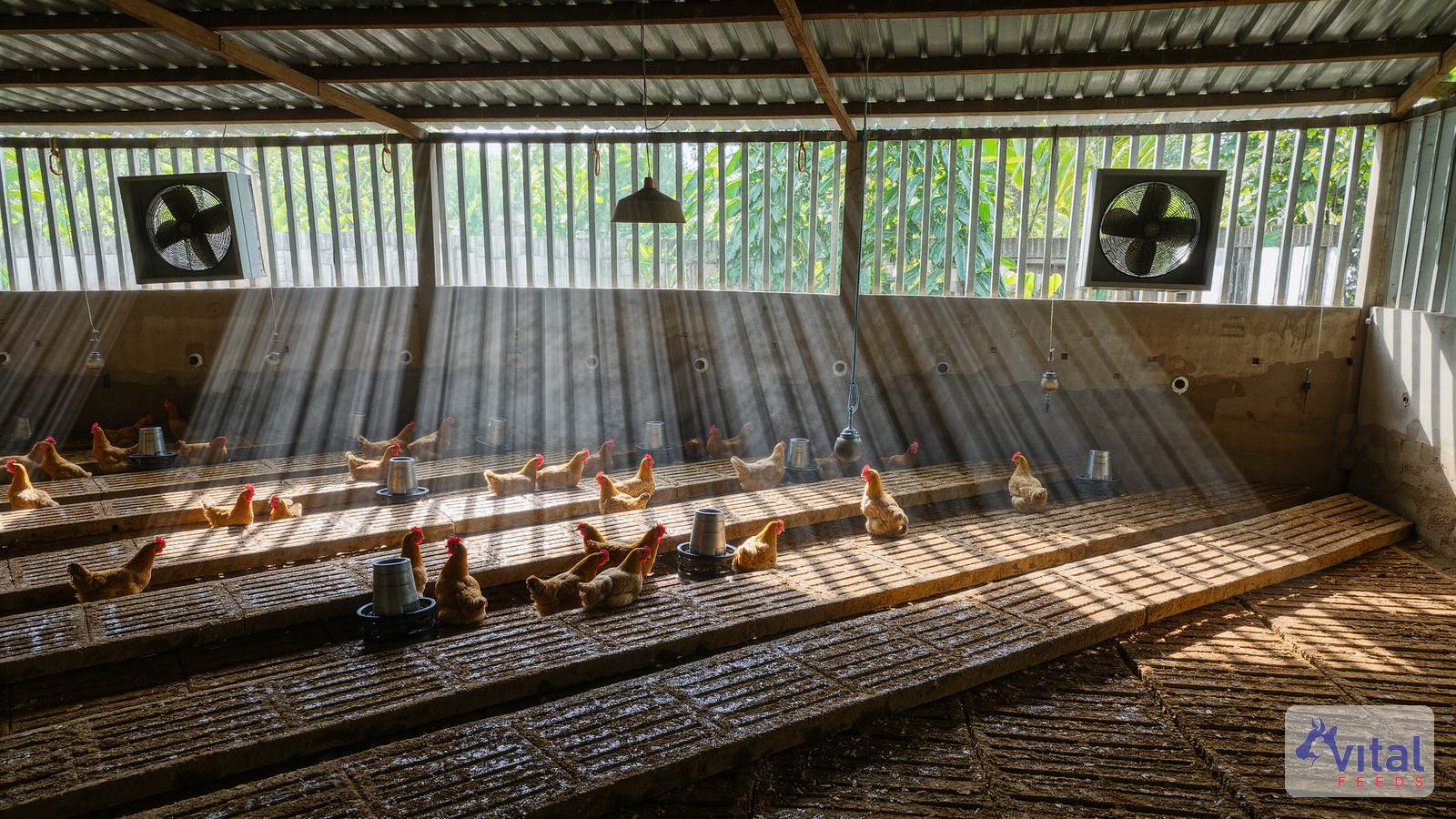
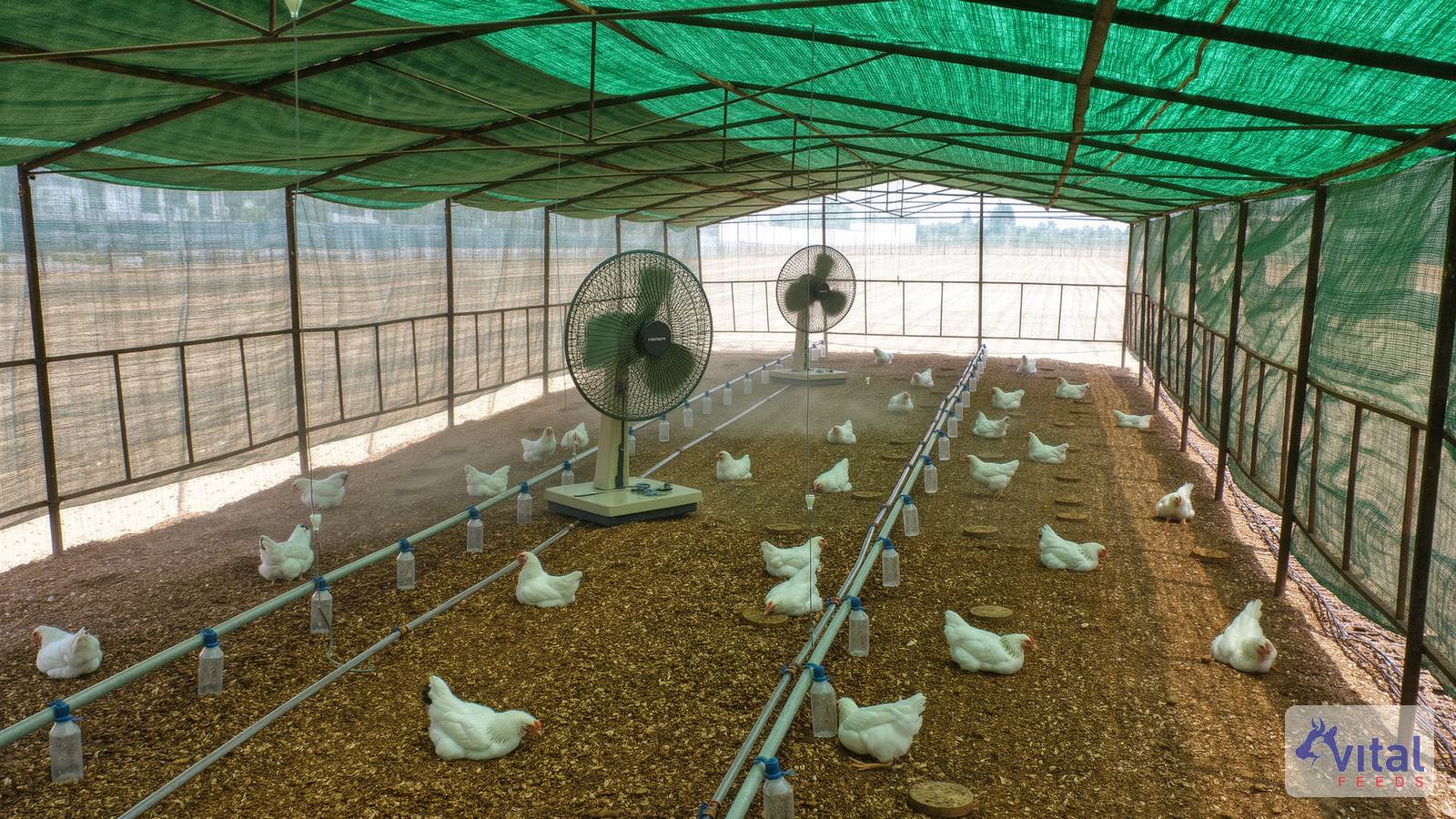
- Move air over the birds. Air movement matters more than air temperature alone. Hy-Line advises an air speed of at least 1.8–2.0 metres per second at bird level in open houses, using stir fans.
- Run fans through the night. Cool the shed as much as possible overnight so the morning stays moderate for longer.
- Use foggers carefully. They cool best in dry heat. In humid evenings they can add to heat stress; use fans alone then.
- Reduce stocking density where possible — birds make heat for each other.
- Insulate or coat the roof to cut heat coming down from a hot roof. Roof sprinklers help on the hottest days.
- Do not disturb birds during peak heat. Do vaccination, weighing, catching and transport early in the morning or at night.
What are the early signs of heat stress?
Panting with open beaks and wings held away from the body, birds lying flat or crowding to the coolest part of the shed, a sudden fall in feed eaten, more water drunk, watery droppings, and in layers smaller eggs and thinner shells. Acting when you see these is far more effective than reacting after production has fallen. If birds become dull or start dying, call your vet at once.
Does heat stress affect FCR?
Yes. Birds that eat less and spend energy panting grow slower and convert feed worse. Work through our seven checks that lower FCR before and during summer.
Written by Waqas Rafiq, CEO, Vital Feeds (Private) Limited.
See our broiler feed, layer feed and full poultry feed range, or message the mill on WhatsApp (UAN 0311 1555136) to plan a hot-weather feeding programme.